#2907 ** "Unlocking Human Potential: How Arfi Foundation Harnesses Artificial Intelligence for Social Impact"
**
At the Arfi Foundation, we believe that technology has the power to drive positive change and improve the lives of individuals and communities around the world. One area that holds tremendous potential for social impact is Artificial Intelligence (AI). In this blog post, we'll explore the exciting world of AI and how Arfi Foundation is using it to make a meaningful difference in the lives of those we serve.
**What is Artificial Intelligence?**
Artificial Intelligence refers to the development of computer systems that can perform tasks that would typically require human intelligence, such as learning, problem-solving, and decision-making. AI systems can analyze vast amounts of data, identify patterns, and make predictions or recommendations based on that data. While AI has been around for decades, recent advancements in machine learning and deep learning have made it possible to build AI systems that are increasingly sophisticated and accurate.
**How is Arfi Foundation using Artificial Intelligence?**
At Arfi Foundation, we're using AI in a variety of ways to amplify our impact and improve the effectiveness of our programs. One example is our use of AI-powered data analysis to identify areas of high need in the communities we serve. By analyzing data on poverty rates, educational outcomes, and health indicators, we can pinpoint areas where our programs are most needed and tailor our interventions to have the greatest impact.
We're also using AI to develop personalized learning plans for students in our education programs. By analyzing a student's learning style, strengths, and weaknesses, we can create customized plans that help them overcome learning challenges and achieve their full potential.
In addition, we're using AI to optimize our disaster response efforts. By leveraging satellite imagery and machine learning algorithms, we can quickly identify areas of need and allocate resources more effectively.
**Practical Insights: How to Get Started with AI**
If you're interested in exploring AI for social impact, here are a few practical tips to get you started:
1. **Start small**: Don't try to tackle everything at once. Begin with a small pilot project or proof-of-concept to test the waters and build momentum.
2. **Collaborate with experts**: AI is a complex field that requires collaboration with experts in data science, machine learning, and software development.
3. **Focus on impact**: Remember that AI is a tool, not an end in itself. Focus on how you can use AI to drive positive change and improve outcomes for your beneficiaries.
4. **Be transparent and accountable**: AI systems can be opaque and difficult to understand. Make sure you're transparent about how you're using AI and accountable for its use.
**Conclusion**
Artificial Intelligence has the potential to revolutionize the way we work and make a meaningful difference in the lives of individuals and communities around the world. At Arfi Foundation, we're committed to harnessing the power of AI to drive positive change and improve outcomes for those we serve. Whether you're an experienced technologist or just starting to explore AI, we hope this blog post has inspired you to think creatively about how technology can be used to drive social impact.
**EXCERPT:**
"Discover how Arfi Foundation is using Artificial Intelligence to drive positive change and improve outcomes for individuals and communities around the world. From data analysis to personalized learning plans, learn how AI is empowering our work and amplifying our impact."




#2558 **Unlocking Human Potential with Artificial Intelligence: How Arfi Foundation is Revolutionizing Philanthropy**
**CONTENT**
As the world becomes increasingly digital, the potential for Artificial Intelligence (AI) to transform various sectors, including philanthropy, continues to grow. At the Arfi Foundation, we're committed to harnessing the power of AI to drive meaningful change and improve the lives of marginalized communities. In this blog post, we'll delve into the world of AI and explore how our organization is leveraging this technology to create a more equitable and just society.
**What is Artificial Intelligence?**
Before we dive into the specifics of Arfi Foundation's AI initiatives, let's take a step back and understand what AI is. Simply put, AI refers to the development of computer systems that can perform tasks that typically require human intelligence, such as learning, problem-solving, and decision-making. AI can be categorized into two main types: Narrow or Weak AI, which is designed to perform a specific task, and General or Strong AI, which aims to replicate human intelligence across a wide range of tasks.
**AI for Social Good: How Arfi Foundation is Using AI to Drive Impact**
At the Arfi Foundation, we believe that AI has the potential to revolutionize the way we approach philanthropy. By leveraging AI, we can identify areas of greatest need, optimize our resource allocation, and scale our impact. Here are some ways we're using AI to drive meaningful change:
1. **Predictive Analytics**: We're using machine learning algorithms to analyze data on poverty rates, education outcomes, and healthcare access to identify areas where our support can have the greatest impact. This allows us to target our resources more effectively and maximize our return on investment.
2. **Resource Allocation**: AI helps us optimize our resource allocation by identifying the most cost-effective ways to deliver programs and services. This means that we can achieve more with less, which is critical in today's resource-constrained environment.
3. **Virtual Assistance**: We're leveraging AI-powered chatbots to provide virtual assistance to our beneficiaries, enabling them to access essential services and support more easily.
**Practical Insights: Challenges and Opportunities**
While AI holds tremendous promise for philanthropy, there are also challenges and opportunities to consider. Some of the key takeaways from our experience with AI include:
1. **Data Quality**: AI is only as good as the data it's trained on. Ensuring that our data is accurate, comprehensive, and up-to-date is critical to achieving meaningful impact.
2. **Regulatory Frameworks**: As AI becomes increasingly prevalent in philanthropy, regulatory frameworks will need to evolve to address issues such as data protection, accountability, and transparency.
3. **Digital Divide**: Not everyone has access to the digital tools and technologies that AI is built on. We need to prioritize digital inclusion to ensure that our beneficiaries can benefit from AI-driven initiatives.
**Conclusion**
At the Arfi Foundation, we're committed to harnessing the power of AI to drive meaningful change and improve the lives of marginalized communities. By leveraging AI, we can identify areas of greatest need, optimize our resource allocation, and scale our impact. As we continue to explore the potential of AI in philanthropy, we're excited to share our insights and experiences with the wider community. Join us on this journey and together, let's unlock human potential with Artificial Intelligence.
**EXCERPT**
Discover how the Arfi Foundation is revolutionizing philanthropy with Artificial Intelligence. From predictive analytics to virtual assistance, learn how we're harnessing AI to drive meaningful change and improve the lives of marginalized communities.




#2209 ** "Unlocking the Potential of Artificial Intelligence for Social Impact: How Arfi Foundation is Revolutionizing Charity Work"
**
At Arfi Foundation, we believe that technology has the power to transform the way we approach social impact. One of the most exciting and rapidly evolving technologies in this space is Artificial Intelligence (AI). In this blog post, we'll explore the potential of AI for charity work, how Arfi Foundation is leveraging AI to drive social change, and the practical insights and information you need to get started.
**What is Artificial Intelligence and Why Matters for Charity Work?**
Artificial Intelligence refers to the development of computer systems that can perform tasks that typically require human intelligence, such as learning, problem-solving, and decision-making. In the context of charity work, AI can be used to analyze large datasets, predict outcomes, and optimize programs. This can lead to more efficient and effective resource allocation, improved data-driven decision-making, and increased impact.
**How Arfi Foundation is Using AI for Social Impact**
At Arfi Foundation, we're committed to harnessing the potential of AI to drive social change. We're currently working on several projects that leverage AI to improve program delivery, enhance donor engagement, and increase transparency and accountability. For example, we're using machine learning algorithms to analyze data on poverty rates, education outcomes, and healthcare access to identify areas of greatest need and optimize our program investments.
We're also using AI-powered chatbots to enhance donor engagement and improve communication with stakeholders. By providing personalized and timely responses to donor inquiries, we're able to build stronger relationships and increase support for our programs. Furthermore, we're using AI-powered tools to analyze data on program outcomes and identify areas for improvement, allowing us to continuously refine and optimize our programs.
**Practical Insights and Information**
So, how can you get started with AI in your charity work? Here are a few practical tips and insights:
1. **Start small**: Don't feel like you need to overhaul your entire organization to get started with AI. Begin with a small pilot project or a single use case, and gradually scale up as you become more comfortable with the technology.
2. **Focus on data analysis**: AI is only as good as the data it's trained on. Make sure you have a robust and reliable data management system in place to support your AI initiatives.
3. **Engage with experts**: Don't try to tackle AI on your own. Engage with experts in the field to get guidance on how to implement AI solutions that meet your needs.
4. **Be transparent**: AI can be complex and opaque, so it's essential to be transparent about how you're using AI and what benefits it's bringing to your organization and stakeholders.
**The Future of AI in Charity Work**
As AI continues to evolve and mature, we can expect to see even more innovative applications in charity work. From AI-powered fundraising campaigns to AI-driven program evaluation, the possibilities are endless. At Arfi Foundation, we're committed to staying at the forefront of this trend and exploring new ways to harness the potential of AI for social impact.
**Conclusion**
Artificial Intelligence has the power to revolutionize the way we approach charity work. By leveraging AI to analyze data, predict outcomes, and optimize programs, we can drive greater efficiency, effectiveness, and impact. At Arfi Foundation, we're committed to harnessing the potential of AI to drive social change and improve the lives of those we serve. Join us in exploring the exciting possibilities of AI for social impact.
**EXCERPT:** "Discover how Arfi Foundation is leveraging Artificial Intelligence to drive social change and improve the lives of those we serve. Learn about the practical insights and information you need to get started with AI in your charity work, and explore the exciting possibilities of AI for social impact."




#1860 ** "Unlocking a Brighter Future: How Arfi Foundation is Leveraging Artificial Intelligence for Social Impact"
**
At Arfi Foundation, we've always been driven by a passion to create a more just and equitable world. As a leading NGO, we've been at the forefront of innovation, using cutting-edge technologies to amplify our impact and make a tangible difference in the lives of those we serve. One area we've been particularly excited about is Artificial Intelligence (AI). In this blog post, we'll delve into the exciting world of AI and explore how Arfi Foundation is harnessing its power to drive social change.
**What is Artificial Intelligence?**
Before we dive into the specifics, let's take a moment to understand what AI is all about. Simply put, AI refers to the development of computer systems that can perform tasks that typically require human intelligence, such as learning, problem-solving, and decision-making. From chatbots and virtual assistants to image recognition and natural language processing, AI has become an integral part of our daily lives.
**How is Arfi Foundation using AI?**
At Arfi Foundation, we're using AI in a variety of ways to enhance our programs and services. One key area we're focusing on is data analysis. We're using machine learning algorithms to analyze vast amounts of data from our various projects, allowing us to identify patterns and trends that would be impossible for humans to detect. This enables us to make informed decisions, optimize our interventions, and ultimately, achieve greater impact.
For instance, our AI-powered analytics tool helped us identify areas of high poverty in rural communities, enabling us to target our interventions more effectively and reach those who need our support the most. We're also using AI to optimize our supply chain management, ensuring that our resources are allocated efficiently and that we're minimizing waste.
**AI-powered tools for social good**
In addition to data analysis, we're also exploring the use of AI-powered tools to support our social programs. One example is our chatbot, which provides emotional support and counseling services to individuals affected by trauma. Our chatbot uses natural language processing to respond to user queries, offering a safe and accessible space for those who may be struggling.
We're also experimenting with AI-powered virtual assistants, which can help us triage and prioritize cases, freeing up our human resources to focus on more complex and high-need situations. By leveraging AI in this way, we're able to scale our impact, reach more people, and make a greater difference in the world.
**Addressing concerns around AI**
As AI continues to evolve, we're aware of the potential risks and challenges associated with its use. We're committed to ensuring that our AI systems are developed and deployed in a responsible and transparent manner, with a focus on fairness, accountability, and inclusivity.
To address concerns around bias and data quality, we're working closely with experts in the field to develop and implement robust testing protocols. We're also engaging with our stakeholders and beneficiaries to ensure that our AI systems are culturally sensitive and effective in the contexts in which we operate.
**Conclusion**
At Arfi Foundation, we believe that AI has the potential to be a game-changer for social impact. By harnessing its power, we're able to amplify our reach, optimize our programs, and make a greater difference in the world. As we continue to explore the possibilities of AI, we're committed to doing so in a responsible and inclusive manner, always prioritizing the needs and well-being of those we serve.
**EXCERPT:** "Discover how Arfi Foundation is using Artificial Intelligence to drive social change and amplify its impact. From data analysis to AI-powered tools, learn how we're harnessing the power of AI to create a brighter future for all."




#1479 So, I Tried an AI Shopping Cart
The first supermarket, the Piggly Wiggly in Memphis, opened its doors in 1916. It was the first time people could wander around a store and pick their items from a shelf instead of handing a list to a clerk who would gather everything for them—typically without any choice of brand or style. Grocery shopping remains a daily or weekly ritual for most people, and it can be a real chore—especially if you’re shopping for a large family. My own grocery lists aren’t all that long, but I still find myself juggling my phone and a scrap of paper as I walk around the store, checking for digital coupons and trying to do quick math. So when I read that one of the local grocery stores (a ShopRite) was rolling out Smart Shopping Carts powered by artificial intelligence (AI), I was intrigued.
I’m naturally dubious about a lot of AI tools, but grocery shopping seemed like a place where a little digital help might come in handy. So I headed out to see whether these fancy new carts would offer real benefits or just a lot of targeted advertisements.
What are caper carts?
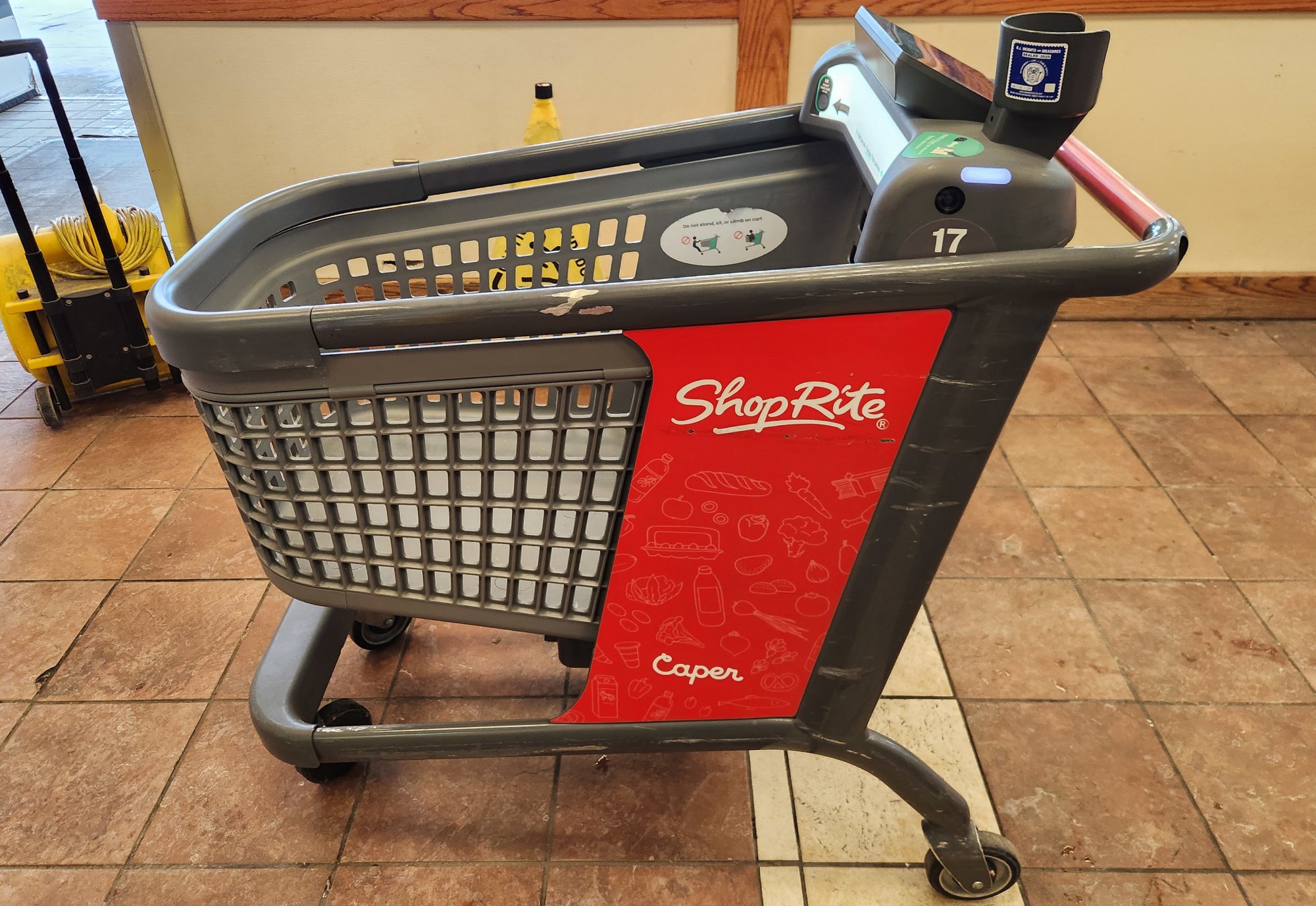
The carts in question are Caper Carts, which is owned by Instacart. They’re pretty large and tank-like, and kind of heavy to push.

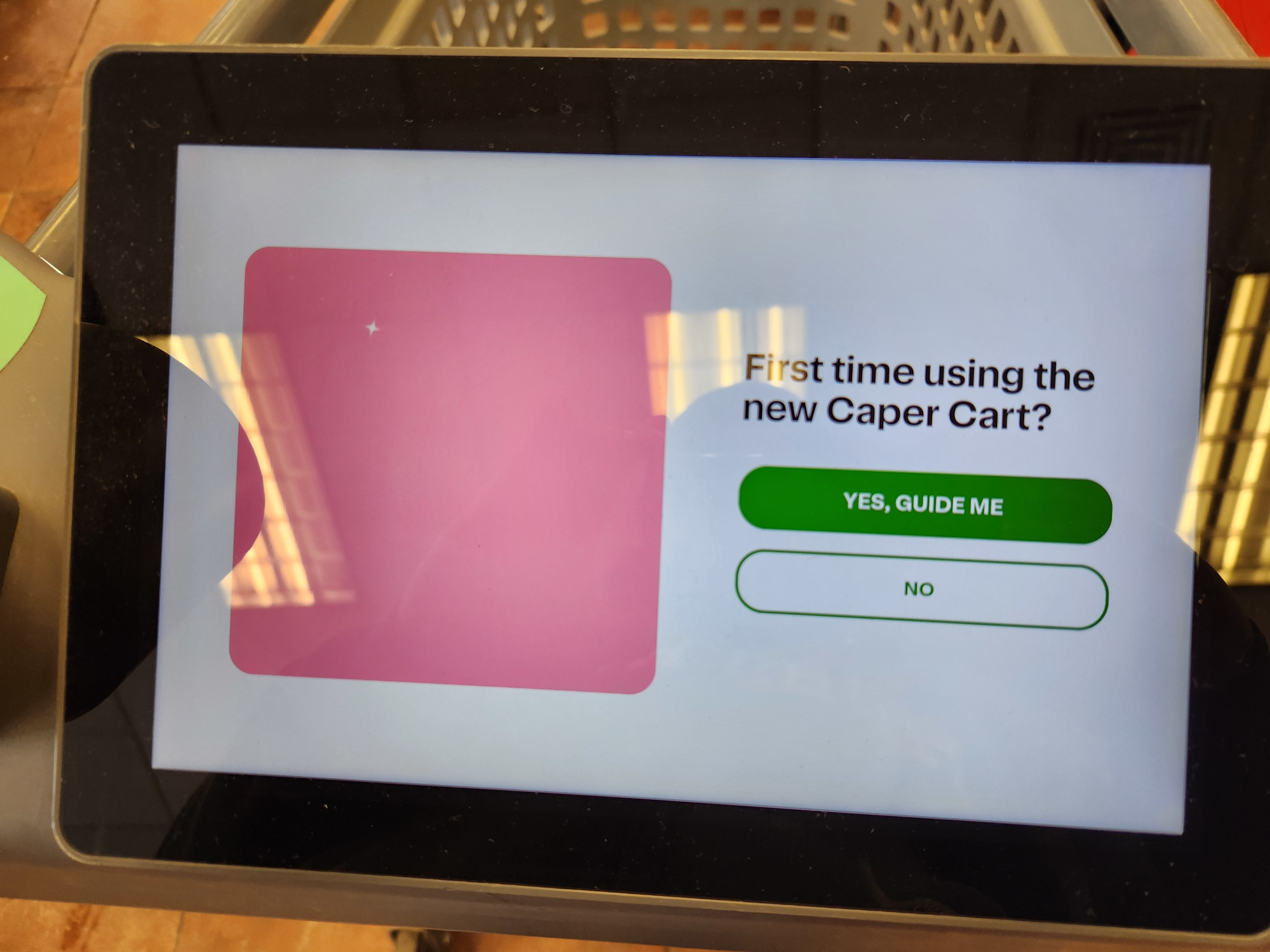
You need to have an account with ShopRite in order to use these carts, as they use your phone number to track your purchases; you can choose to store a credit card or other form of payment in there for convenience, but it’s not required. When you walk in the store, the Caper Carts are right there in the entrance area. When you pull one out, the screen lets you enter your phone number, then offers you a (mercifully brief) tutorial.


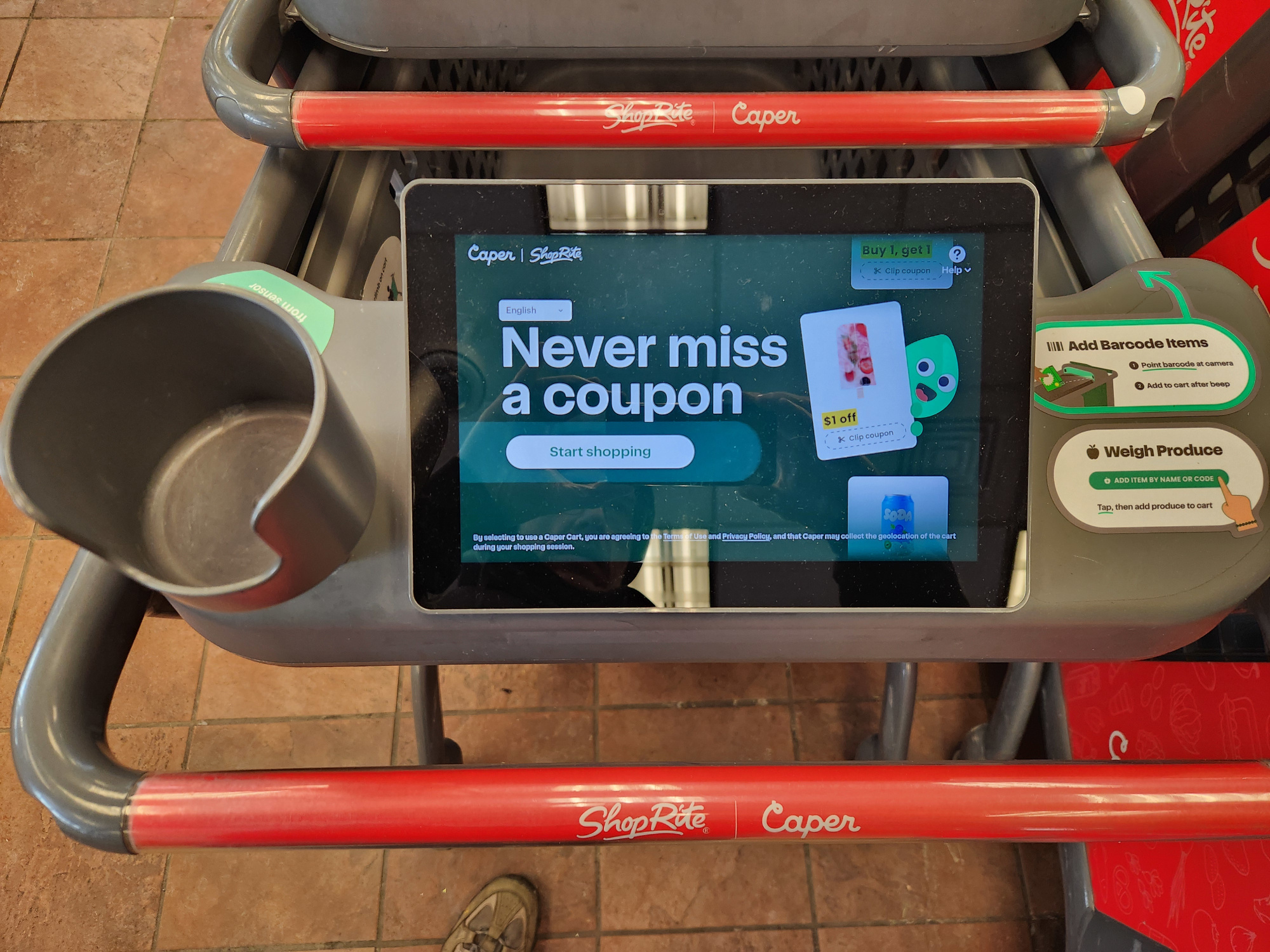
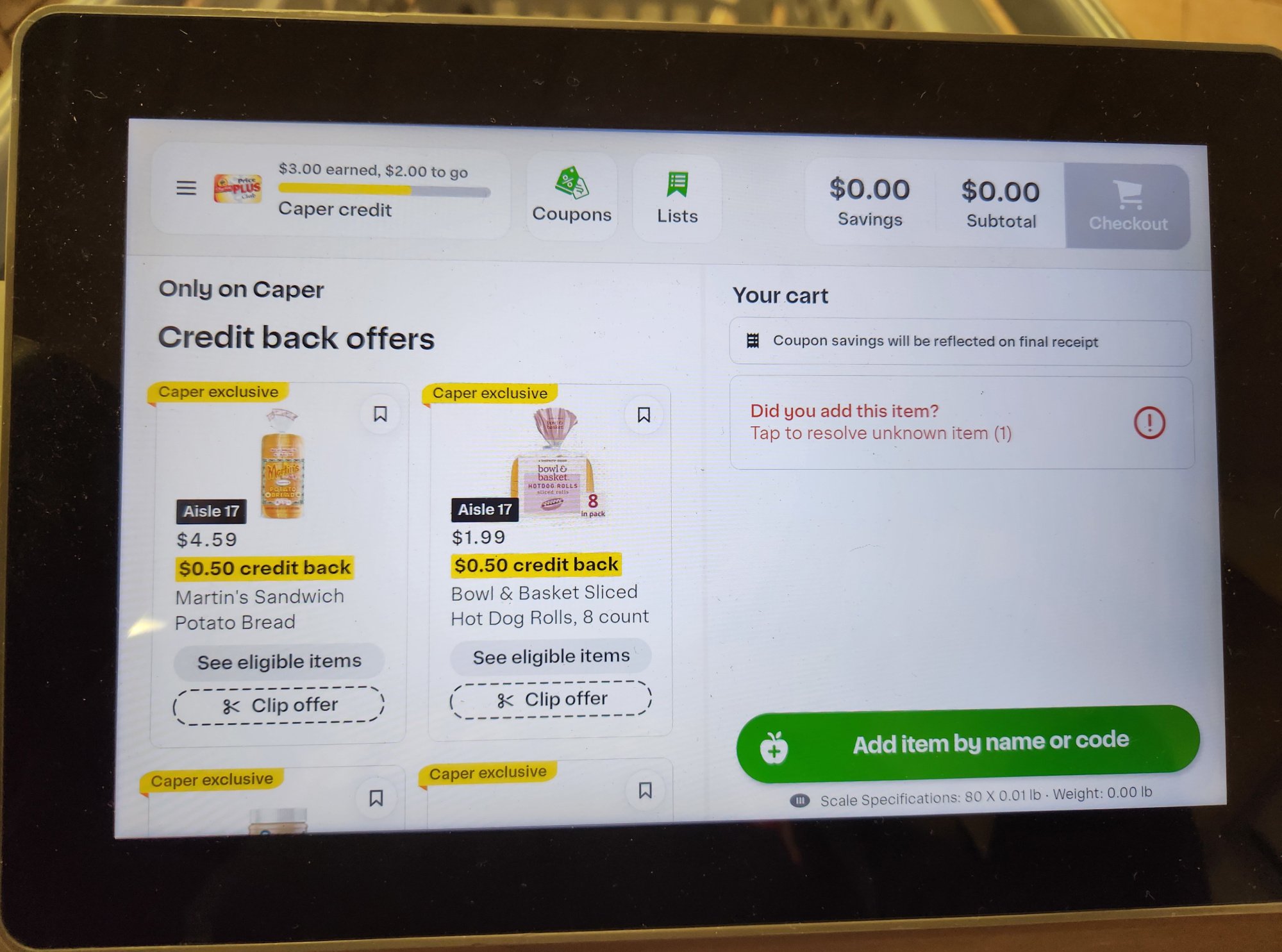
The carts have barcode scanners mounted on both sides of the back of the cart, and the cart itself is a scale, which is both how it ensures you’ve scanned everything in the cart and how it calculates the cost of loose produce. If you’ve ever used a self-checkout in a grocery store, it’s kind of similar: You hold items up to the scanners and then drop them into your cart. For produce, you look up what you’re buying and then drop it into the cart, where it’s weighed and added to the total. Along the way, the cart will look for potential coupons or deals you might be interested in. The carts can import your shopping lists from the store’s app, if you want, and will keep track of your loyalty points and rewards as well.
How to use a Caper Cart
The first Caper Cart I selected didn’t work; nothing would scan no matter how I held things up to the scanners. This wasn’t a big deal—I let the store folks know, logged out of the cart, and grabbed another. The second cart worked perfectly.

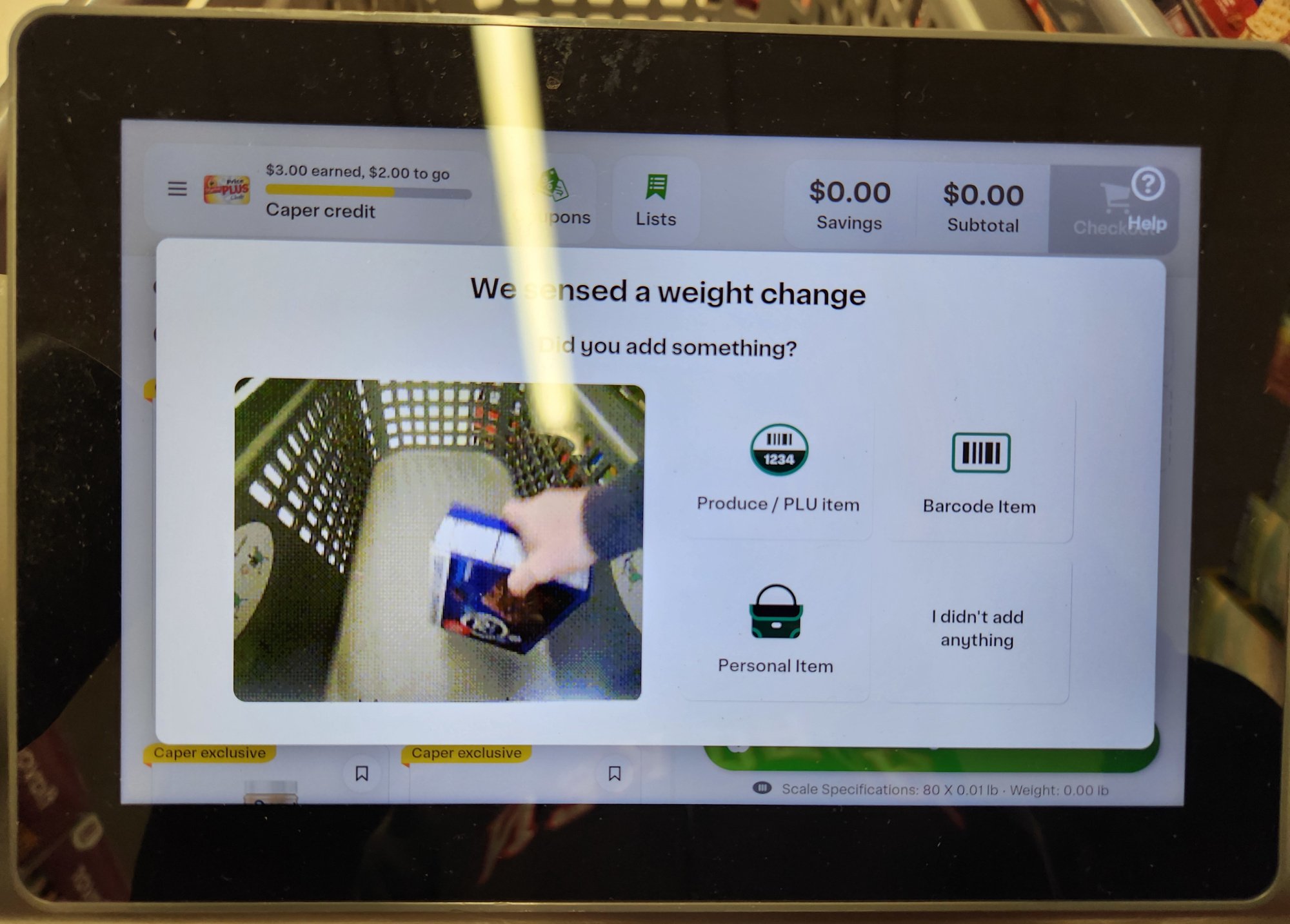
These carts are pretty heavy, and the second cart I used had a loose wheel which made it rumble loudly as I walked the aisles—you aren’t going to be racing these carts and jumping on for a quick glide. When I dropped an item in the cart without scanning it, the cart politely showed me a video of me placing the item (creepy) and asked if I wanted to fess up to adding something to the cart. It did, however, give me the option to declare a “personal item,” which is a solid feature.

I forgot to put my shopping bags in the cart, because I am frequently dumb. You’re supposed to bag as you go, which saves you time; I had to bag after checkout, which did not save me time. On the other hand, I don’t always shop in bagging order, so bagging as I go might result in some of my items getting crushed under heavier groceries, or me having to re-arrange everything in the middle of the shopping experience. I kind of like bagging at the end, when I can make decisions about how to arrange everything optimally.
If you change your mind about an item, you just remove it from the cart. The Caper system will notice and remove the item from your bill.
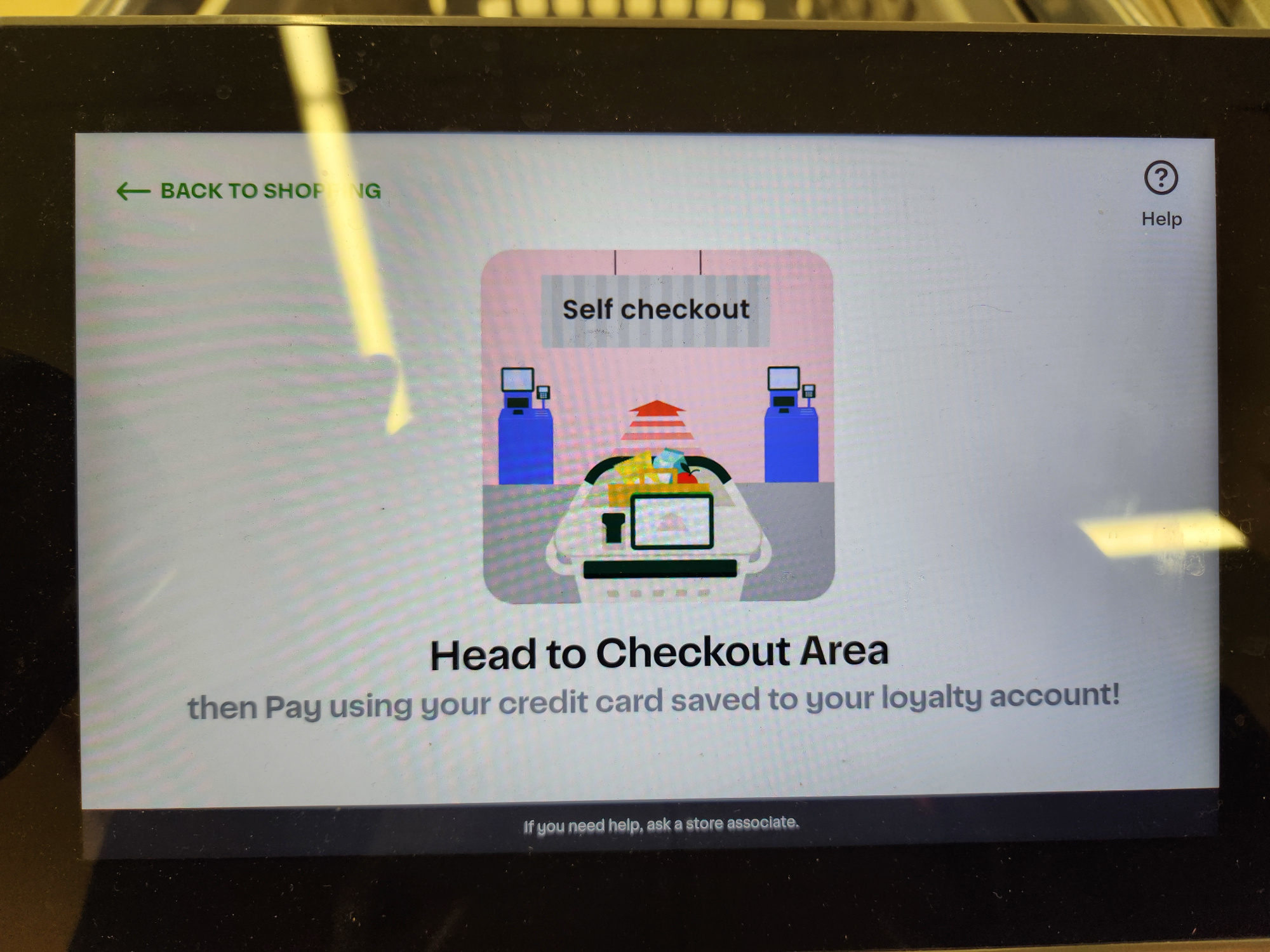
When you’re done, you just tap “Checkout” and head to the Checkout Area.

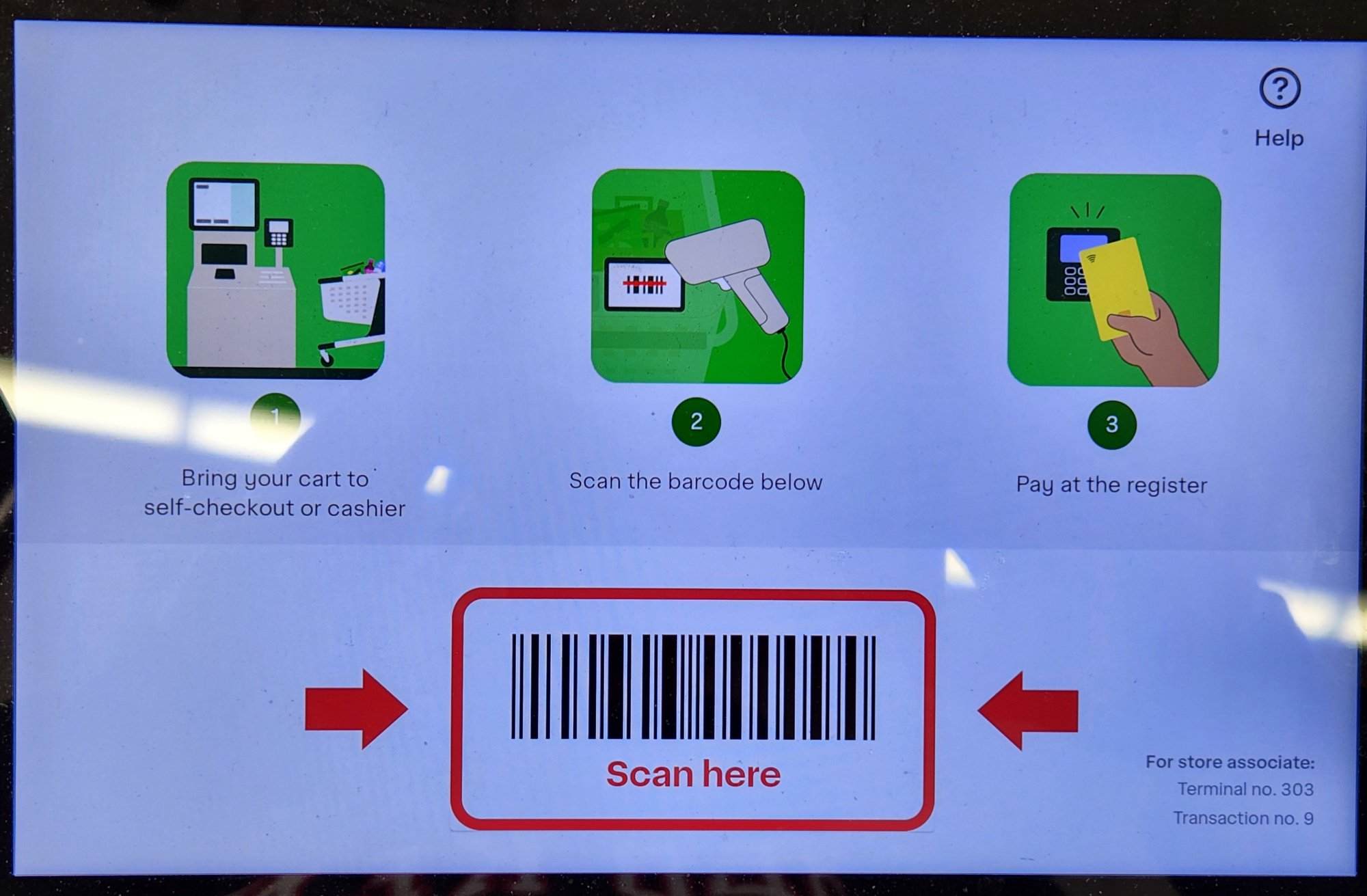
This will be different depending on the specific store you’re in—some stores don’t have checkout lanes for the Caper Carts, but this ShopRite did. There was only one lane for Caper Carts, and I had to wait behind someone as they checked themselves out. Then I scanned a barcode on my screen with a gun and tapped my card to pay while a security guard loomed nearby, presumably to discourage folks from making a run for it.


The pros and cons of AI shopping carts
Overall, the AI shopping cart experience was a slight upgrade from typical grocery shopping. Bagging as you go is convenient, and checkout is a little easier because you scan a single barcode instead of two dozen. I didn’t receive many personalized coupons or recipe suggestions because this was my first time using the system, but I can see how that could become very useful if the cart is able to dig up coupons or offers that I missed.
A few specific notes:
The cart can accidentally scan a barcode if you get close to a shelf, which can cause confusion, though the cart will quickly delete it if the weight doesn’t change.
As noted above, the carts are pretty heavy. If you’re going to be buying a lot of groceries all at once, this could become a real workout.
Adding produce can be a little complicated: You have to locate the “price look up” (PLU) code for the specific produce you’re adding, then scan or type it into the screen before dropping it into the cart. That means sometimes hunting for those little stickers and tapping a bunch of numbers into your cart over and over again.
Seeing your total spend add up in real time is useful, especially if you’re tracking costs. If an item costs more than expected, you see it immediately, and if the overall cost is more than anticipated you have time to adjust your selections before you hit the checkout.
Because you have to go through a checkout lane as usual (and there was only one dedicated lane for Caper Carts), during busy times you might wind up waiting a long time to get out of the store, which kind of cancels out the convenience factor. Of course, as more people use these carts, ShopRite might add more dedicated Caper lanes.
Depending on how you shop for groceries, these AI shopping carts might be worth a try—but don’t expect a revolutionary experience.


#1098 Elon Musk, AI and the antichrist: the biggest tech stories of 2025
A look back at the biggest tech stories of the year, from the rise and fall of Musk’s Doge to lucrative investments into AI
Hello, and welcome to TechScape. I’m your host, Blake Montgomery, wishing you a happy and healthy end of the year. I myself have a cold.
Today, we are looking back at the biggest stories in tech of 2025 – Elon Musk’s political rise, burst and fall; artificial intelligence’s subsumption of the global economy, all other technology, and even the Earth’s topography; Australia’s remarkable social media ban; the tech industry’s new Trumpian politics; and, as a treat, a glimpse of the apocalypse offered by one of Silicon Valley’s savviest and strangest billionaires.
How an obscure US government office has become a target of Elon Musk
The chaos Elon Musk and Doge are leaving behind in Washington
Eggings, swastikas and dog poop: Tesla bears brunt of people’s ire against Musk
‘I’m selling the Nazi mobile’: Tesla owners offload cars after Musk’s fascist-style salutes
Inside Elon Musk’s plan to rain SpaceX’s rocket debris over Hawaii’s pristine waters
Elon Musk’s SpaceX ‘preparing for flotation that could value it at over $1tn’
Continue reading...






















Comments
5 comments