#3138 **Empowering a Brighter Future through Robotics: The Arfi Foundation's Journey**
**CONTENT**
As the world grapples with the challenges of technological advancement, social responsibility, and sustainability, non-governmental organizations (NGOs) like Arfi Foundation are at the forefront of harnessing cutting-edge innovations to create a better world. One area that has gained significant attention in recent years is robotics, a rapidly evolving field with the potential to revolutionize various sectors, including education, healthcare, and environmental conservation. In this blog post, we will delve into the world of robotics and explore how Arfi Foundation is leveraging this technology to drive positive change.
**What is Robotics, and Why is it Important?**
Robotics is the branch of engineering that deals with the design, construction, and operation of robots, which are machines programmed to perform tasks autonomously or semi-autonomously. Robots have a wide range of applications, from assembly lines in manufacturing to search and rescue operations in disaster relief. The importance of robotics lies in its ability to enhance efficiency, accuracy, and productivity while reducing the risk of human error.
At Arfi Foundation, we recognize the potential of robotics to address some of the world's most pressing challenges, including poverty, inequality, and environmental degradation. By harnessing robotics technology, we aim to create innovative solutions that improve the lives of marginalized communities, promote sustainable development, and foster a culture of inclusivity and social responsibility.
**Arfi Foundation's Robotics Initiatives**
Arfi Foundation's robotics program is designed to empower marginalized communities through education, capacity building, and innovation. Our initiatives focus on three key areas:
1. **Robotics in Education**: We believe that technology should be accessible to everyone, regardless of their socio-economic background. Our robotics program provides free or low-cost robotics kits, training, and mentorship to underprivileged students, enabling them to develop essential skills in science, technology, engineering, and mathematics (STEM).
2. **Disaster Response and Recovery**: In the aftermath of natural disasters, robotics technology can play a critical role in search and rescue operations, debris removal, and infrastructure assessment. Our team works closely with local authorities, NGOs, and community leaders to develop robotics solutions that can respond to disasters and support recovery efforts.
3. **Sustainable Development**: Robotics can help reduce waste, improve resource management, and promote sustainable practices in various sectors, including agriculture, water management, and waste management. Our program focuses on developing robotics solutions that support sustainable development and promote eco-friendly practices.
**Practical Insights and Takeaways**
As Arfi Foundation continues to explore the vast potential of robotics, we have gained valuable insights and practical knowledge that can benefit other NGOs and organizations working in this area. Here are some key takeaways:
1. **Collaboration is Key**: Partnering with local communities, governments, and other stakeholders is crucial for developing effective robotics solutions that address specific needs and challenges.
2. **Inclusive Design**: Robotics technology should be designed with inclusivity and accessibility in mind, ensuring that it benefits marginalized communities and promotes social equity.
3. **Capacity Building**: Building local capacity and expertise in robotics is essential for long-term sustainability and impact.
4. **Addressing Ethical Concerns**: As robotics technology advances, it's essential to address ethical concerns related to data protection, privacy, and the potential impacts on employment and social structures.
**Conclusion**
The world of robotics holds immense promise for creating a better future, and Arfi Foundation is committed to harnessing this technology to drive positive change. By working together with local communities, governments, and other stakeholders, we aim to develop innovative robotics solutions that address some of the world's most pressing challenges. As we continue on this journey, we invite you to join us in exploring the vast potential of robotics and its role in shaping a brighter, more sustainable future for all.
**EXCERPT**
At Arfi Foundation, we believe that robotics has the power to transform lives, communities, and the world at large. Our innovative robotics program focuses on education, disaster response, and sustainable development, addressing some of the world's most pressing challenges and promoting social responsibility. Join us as we explore the vast potential of robotics and its role in shaping a brighter future for all.




#2789 ** "Empowering Communities with Robotics: Arfi Foundation's Innovative Approach to Social Impact"
**
At the Arfi Foundation, we believe that technology has the power to transform lives and communities. Our organization has been at the forefront of harnessing the potential of robotics to address some of the world's most pressing social challenges. In this blog post, we'll delve into the exciting world of robotics and explore how our foundation is using this technology to create positive change.
**The Power of Robotics**
Robotics has come a long way since its inception, and today, it's being applied in various sectors, from healthcare to education and beyond. With advancements in artificial intelligence, machine learning, and sensor technologies, robots can now perform complex tasks with ease, precision, and speed. At the Arfi Foundation, we see the potential of robotics to not only automate tasks but also to create new opportunities for people, especially those in disadvantaged communities.
**Arfi Foundation's Robotics Initiatives**
Our organization has been actively working in the field of robotics for several years, with a focus on developing innovative solutions to real-world problems. We've established partnerships with local schools, universities, and community groups to create robotics programs that cater to diverse needs and interests. Our initiatives include:
1. **Robotics Training and Education**: We provide hands-on training and education programs for students, teachers, and community members, equipping them with the skills and knowledge to design, build, and program robots.
2. **Assistive Robotics**: We're developing assistive robots that can help people with disabilities, elderly individuals, and those in need of assistance with daily activities, such as mobility support and home care.
3. **Environmental Monitoring**: We're creating robots that can monitor and track environmental changes, such as air and water quality, to inform policy decisions and promote sustainable practices.
4. **Disaster Response**: We're designing robots that can assist in disaster response efforts, such as search and rescue, damage assessment, and debris removal.
**Practical Insights and Applications**
Our robotics initiatives have already shown promising results in various communities. Here are some practical insights and applications:
* **Job creation**: Our training programs have created employment opportunities for people with skills in robotics, contributing to local economic growth.
* **Increased accessibility**: Our assistive robots have improved the quality of life for people with disabilities, enabling them to participate more fully in their communities.
* **Environmental monitoring**: Our environmental monitoring robots have provided valuable insights into local environmental conditions, helping policymakers make informed decisions.
**Challenges and Opportunities**
While our robotics initiatives have been successful, we face several challenges, including:
* **Accessibility**: Ensuring that our programs are accessible to diverse communities and individuals.
* **Funding**: Securing funding for our initiatives, which often requires creative partnerships and resource mobilization.
* **Adoption**: Encouraging the adoption of robotics technology in various sectors and communities.
**Conclusion**
The Arfi Foundation is committed to harnessing the potential of robotics to create positive social impact. By combining innovative technologies with community engagement and education, we're empowering communities to drive change. We invite you to join us on this journey, exploring the possibilities of robotics for social good.
**EXCERPT:**
At the Arfi Foundation, we're using robotics to create positive change in communities worldwide. Our innovative initiatives, from assistive robots to environmental monitoring, are transforming lives and driving social impact. Explore how we're harnessing the power of robotics to empower people and create a better future.




#2440 **Emerging Technologies for a Better World: How Arfi Foundation is Revolutionizing Robotics for Social Impact**
CONTENT:
As we navigate the complexities of the 21st century, it's becoming increasingly clear that technology has the power to transform our world for the better. At Arfi Foundation, we've long believed in the potential of emerging technologies to drive positive change, and one area that holds particular promise is robotics. In this blog post, we'll delve into the world of robotics and explore how our organization is harnessing its power to create a more just and equitable society.
**What is Robotics?**
So, what exactly is robotics? At its core, robotics refers to the design, construction, and use of machines that can perform tasks autonomously or with the aid of human input. From industrial manufacturing to medical care, robotics has become an integral part of our daily lives. But what's often overlooked is the potential of robotics to drive social impact.
**Arfi Foundation's Robotics Initiatives**
At Arfi Foundation, we've been working on various robotics projects that aim to address some of the world's most pressing challenges. Our initiatives focus on three key areas: assistive technology, disaster response, and education.
In the realm of assistive technology, we've developed a robotic exoskeleton designed to help individuals with mobility impairments walk and interact with their environment. This cutting-edge technology has the potential to transform the lives of millions of people worldwide, empowering them to live more independently and with greater dignity.
In the aftermath of natural disasters, we've deployed robotic systems to aid in search and rescue operations. These robots can navigate through debris-filled spaces, detect anomalies, and even provide critical information to first responders. By leveraging robotics, we can save lives, reduce response times, and provide critical support to affected communities.
Finally, we've created a robotics-based educational program aimed at promoting STEM education among underprivileged youth. Through hands-on training and mentorship, we equip young people with the skills and confidence they need to pursue careers in tech and make a meaningful impact in their communities.
**The Benefits of Robotics for Social Impact**
So, why robotics? What makes it an ideal tool for driving social change? Here are a few reasons why:
* **Scalability**: Robotics allows us to reach a wider audience and scale our impact more efficiently. With robots, we can deploy assistance and support to remote or hard-to-reach areas, reducing the need for human responders and enhancing the effectiveness of our interventions.
* **Cost-effectiveness**: Robotics can be a cost-effective way to deliver services and support. By automating tasks and reducing labor costs, we can allocate more resources to critical areas, such as education and community development.
* **Flexibility**: Robotics offers unparalleled flexibility in terms of deployment and application. We can adapt our robots to respond to changing circumstances and deploy them in a wide range of settings, from urban to rural environments.
**Conclusion**
As we look to the future, it's clear that robotics holds immense potential for driving social impact. At Arfi Foundation, we're committed to harnessing this power to create a more just and equitable world. Whether it's assistive technology, disaster response, or education, our robotics initiatives are designed to empower marginalized communities and promote positive change.
**What's Next?**
As we continue to push the boundaries of robotics for social impact, we invite you to join us on this journey. Stay tuned for updates on our latest projects, and consider supporting our initiatives by donating or spreading the word. Together, we can harness the power of robotics to create a brighter future for all.
EXCERPT:
"Discover how Arfi Foundation is revolutionizing robotics to drive social impact and create a better world. From assistive technology to disaster response and education, our initiatives are harnessing the power of emerging technologies to empower marginalized communities and promote positive change."




#2091 **Empowering Lives with Robotics: Arfi Foundation's Innovative Approach**
**CONTENT**
As we navigate the ever-evolving landscape of technology, non-profit organizations like Arfi Foundation are at the forefront of harnessing its potential to create positive change. One area that holds immense promise is robotics, which has the power to revolutionize various aspects of our lives, from healthcare and education to disaster response and environmental conservation. In this blog post, we'll delve into the world of robotics and explore how Arfi Foundation is leveraging this technology to make a meaningful impact.
**Understanding Robotics**
Robotics is an interdisciplinary field that combines computer science, engineering, and mathematics to design, build, and operate robots. These machines can perform tasks that are repetitive, hazardous, or require precision, freeing humans to focus on more complex and creative endeavors. In the context of Arfi Foundation, robotics is being used to develop innovative solutions that address pressing global challenges.
**Arfi Foundation's Robotics Initiatives**
At Arfi Foundation, we believe that technology should be used as a force for good. Our robotics initiatives are focused on creating accessible and affordable solutions that can be deployed in various settings, from rural communities to disaster zones. Some of our key projects include:
1. **Robotic Assisted Healthcare**: We're developing robots that can assist healthcare professionals in remote or underserved areas, providing essential medical care and support to those in need.
2. **Disaster Response Robotics**: Our team is designing robots that can navigate challenging terrain and provide critical information during disaster response efforts, helping first responders to prioritize their efforts and save lives.
3. **Environmental Conservation Robotics**: We're working on robots that can monitor and mitigate the impact of climate change, from tracking sea level rise to detecting oil spills.
**Key Technologies and Trends**
As robotics continues to evolve, several key technologies and trends are shaping the field. Some of the most exciting developments include:
1. **Artificial Intelligence (AI)**: AI is enabling robots to learn, adapt, and make decisions autonomously, making them more effective and efficient.
2. **Internet of Things (IoT)**: The IoT is connecting robots to a vast network of sensors and devices, allowing them to share data and collaborate with other systems.
3. **Autonomous Systems**: Autonomous robots can navigate and interact with their environment without human intervention, opening up new possibilities for applications like search and rescue.
**Practical Insights and Tips**
If you're interested in exploring robotics with Arfi Foundation, here are some practical insights and tips to get you started:
1. **Collaborate with Experts**: Partner with robotics engineers, AI researchers, and domain experts to develop solutions that are tailored to specific needs.
2. **Focus on Accessibility**: Design robots that are affordable, user-friendly, and accessible to diverse populations.
3. **Emphasize Social Impact**: Prioritize projects that address pressing social and environmental challenges.
**Conclusion**
Robotics is an exciting and rapidly evolving field that holds immense potential for social impact. At Arfi Foundation, we're committed to harnessing this technology to create positive change. By collaborating with experts, focusing on accessibility, and prioritizing social impact, we can develop innovative solutions that empower lives and create a better future for all.
**EXCERPT**
Discover how Arfi Foundation is leveraging robotics to create positive change. From robotic assisted healthcare to disaster response and environmental conservation, our innovative approach is harnessing the power of technology to make a meaningful impact. Learn more about our robotics initiatives and how you can get involved.




#1723 ** "Revolutionizing Lives: How Arfi Foundation is Harnessing the Power of Robotics for Social Impact"
**
At Arfi Foundation, we believe that technology has the power to transform lives and create a better world for all. One area where we're seeing significant potential for positive impact is in the field of robotics. From assistive robots that help individuals with disabilities to robots that enhance disaster response and recovery efforts, the applications of robotics are vast and varied. In this blog post, we'll delve into the exciting world of robotics and explore how Arfi Foundation is working to harness its power for social impact.
**What is Robotics?**
Robotics is the intersection of engineering, computer science, and technology that enables the design, construction, and operation of robots. These machines are programmed to perform specific tasks, from simple actions like grasping and manipulating objects to complex tasks like navigating and interacting with their environment. Robotics has the potential to revolutionize countless industries and aspects of our lives, from healthcare and education to transportation and environmental sustainability.
**Arfi Foundation's Robotics Initiative**
At Arfi Foundation, we recognize the immense potential of robotics to create meaningful social impact. Our robotics initiative aims to develop and deploy robots that can improve the lives of marginalized communities and individuals in need. We're working with a team of experts in robotics engineering, AI, and social impact to design and build robots that are tailored to specific social needs.
One of our flagship projects is the development of assistive robots for individuals with disabilities. These robots are designed to provide support and companionship to individuals who may struggle with daily tasks or feel isolated due to their condition. Our team is working with local organizations and communities to identify the specific needs and requirements of these individuals and develop robots that can meet those needs.
**Practical Applications of Robotics**
So, what kind of robots are we building at Arfi Foundation? Here are a few examples of the practical applications of robotics that we're working on:
1. **Assistive Robots**: As mentioned earlier, our assistive robots are designed to provide support and companionship to individuals with disabilities. These robots can perform tasks like fetching items, providing medication reminders, and even offering emotional support.
2. **Disaster Response Robots**: We're developing robots that can be deployed in disaster scenarios to provide critical support and assistance to affected communities. These robots can help with tasks like search and rescue, damage assessment, and provision of essential supplies.
3. **Environmental Monitoring Robots**: Our environmental monitoring robots are designed to track and analyze environmental data, such as air and water quality, in real-time. This information can be used to inform policy decisions and develop effective solutions to environmental challenges.
**Insights and Lessons Learned**
As we continue to work on our robotics initiative, we're learning valuable lessons about the potential and challenges of this field. Here are a few insights and takeaways:
1. **Collaboration is Key**: Robotics is a multidisciplinary field that requires collaboration between engineers, social scientists, and community members. We're learning the importance of working together to design and deploy robots that meet the specific needs of marginalized communities.
2. **Community Engagement is Crucial**: Our robotics initiative is built on the principles of community engagement and co-design. We're working closely with local organizations and communities to ensure that our robots meet their specific needs and are culturally sensitive.
3. **Scalability is Essential**: As we scale up our robotics initiative, we're learning the importance of developing solutions that are scalable, sustainable, and adaptable to different contexts.
**Conclusion**
At Arfi Foundation, we're passionate about harnessing the power of robotics to create a better world for all. Our robotics initiative is just one example of how we're working to use technology for social impact. We believe that by collaborating with experts, communities, and organizations, we can create robots that truly make a difference in people's lives. Join us on this exciting journey as we explore the possibilities of robotics and work towards a brighter future for all.
**EXCERPT:** "At Arfi Foundation, we're harnessing the power of robotics to create meaningful social impact. From assistive robots for individuals with disabilities to disaster response and environmental monitoring robots, we're working to develop solutions that meet the specific needs of marginalized communities. Join us on this exciting journey as we explore the possibilities of robotics and work towards a brighter future for all."




#1057 Will Your Smart Vacuum Still Work After It Stops Being Supported?
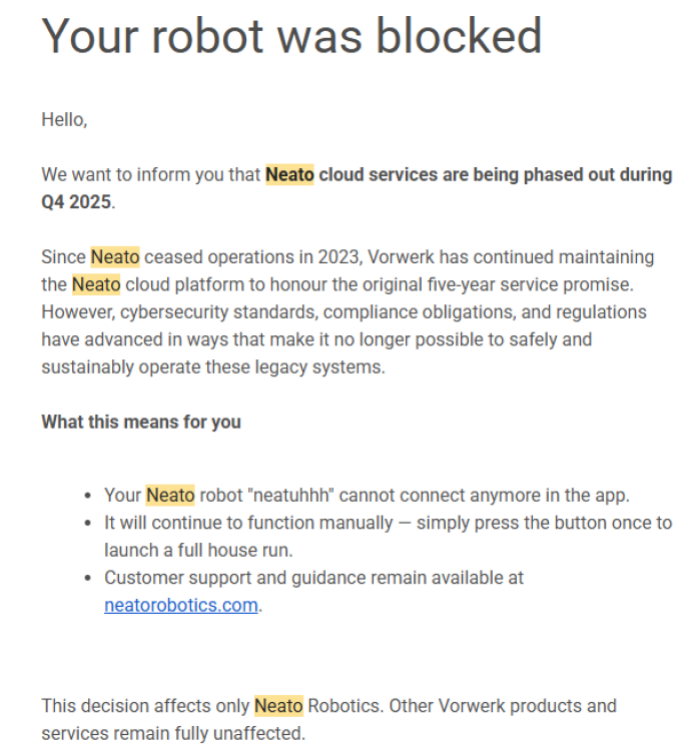
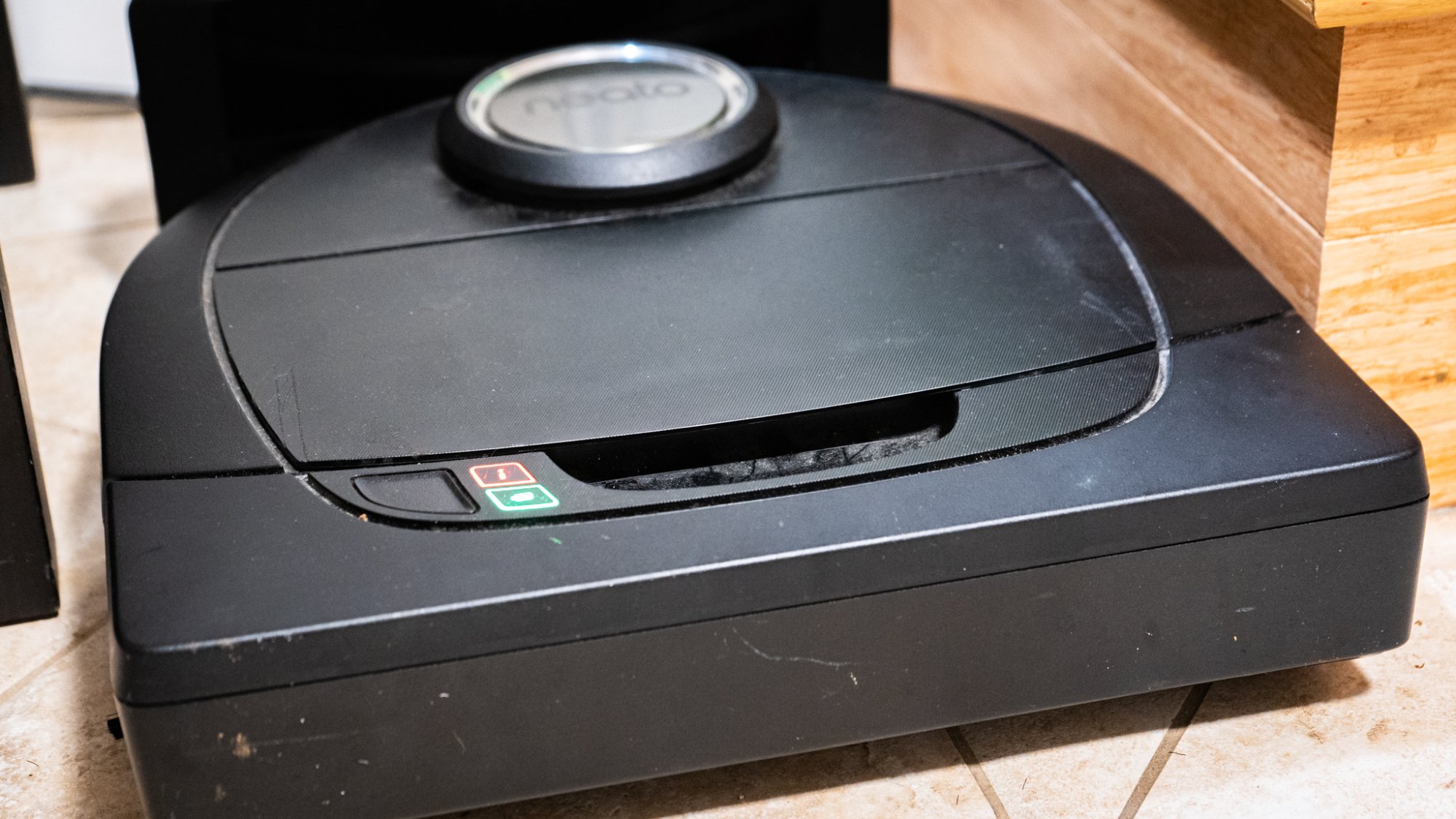
My Neato D5 Connected was once a willing workhorse, but, today, things aren't looking so good. I recently caught an email from the company alerting me that it shut down my vacuum's cloud servers. Now, my once capable Neato is just a LiDAR-equipped vacuum with a soul that's been deprecated. Without cloud servers, the "smart" is gone.
This could be the lobotomized future awaiting Roomba users. Earlier this month, the company behind the pioneering smart vacuum, iRobot, filed for bankruptcy. The remainder of the business will go to its primary manufacturing partner—the one it owes all that money to—Shenzhen Picea Robotics. It's a stark reminder that the longevity of a connected smart device depends entirely on the financial health of the company that made it.
I'm not giving up, however. I'm now attempting to get the Neato D5 back into business. Whether you have a Neato, a Roomba, or another robot vacuum approaching the end of its connected, you can mirror my steps to keep your device cleaning.
Switch your robot vacuum to manual

Following the above email, I tried earnestly to get the Neato back online and back into a routine. I ended up reviving my original account by some miracle, though I have absolutely no access to the vacuum via the app as it currently is.
Luckily, there is already a community of folks working to restore the cloud service that once enabled Neato's robot vacuums to schedule themselves. Neato-connected lets you use Home Assistant to manage the brand's devices without the cloud. This is the best choice for experts if the goal is to revive the robot vacuum to its full capacities.
Neato has already said that the robots will continue to work manually. The D5 has LiDAR, so it can still physically "see" its way around a floor plan. And although you can't schedule the device or remotely control it, you can still get up and push a button to start a cleaning session. If you want to be super extra, Switchbot makes an affordable button-pushing gadget you can install near the vacuum dock to trigger it from your phone, essentially "hacking" a remote start.
The other headache of trying to keep old hardware from going extinct is figuring out if its parts and mechanics still work. My Neato D5, for example, still hasn't successfully managed a manual cleaning session. After some troubleshooting, which involved several factory resets, disconnecting and reconnecting the battery, and cleaning debris from all the sensors, it turns out that one of the LiDAR turrets—the hat on top—needs a fix. The vacuum won't start until that's addressed, since it literally can't navigate without that system spinning at a precise speed.
The Neato D5 is going to require some surgery. I am either going to fix it by stabilizing a band, or buy a replacement part from eBay and have someone more tech-savvy help with the install. There's always the option to donate it to a better cause, too. Rather than hold on to an eight pound paperweight rotting away in the utility closet, it can get a second life with a local robotics group, since Neato vacuums have a reputation for being highly scrappable due to their laser sensors.

Even cheaper robot vacuums, like an Ecovacs, can find a second life this way. While they aren't as easily "hackable" as Neato (or a Roomba), there are plenty of high school robotics teams that can disassemble the devices to retrieve motors and wheels.
Never throw a robot vacuum into the trash. If the device is truly dead and unusable for parts, look into responsibly recycling the Lithium-ion battery as well as the plastic and metal shell with an e-waste recycler.
Preparing for the end of Roomba
If you own a Roomba, you aren't offline yet. iRobot is currently undergoing a restructuring, and the company has stated that app functionality and firmware updates will continue as usual. But inevitable change is coming if Neato's trajectory is any indication. We don't know exactly how Roomba's business will go now that it has changed ownership. Existing Roombas rely on the cloud for much of their flagship functionality, like Smart Maps, which help with specific room targeting. Losing the ability would be a major blow to the hardware's legacy.
You should prepare for what's to come, even if it involves a little over-preparing. Stockpile replacement parts now, while they're still available. Although Roomba's manufacturer has taken over the business, older models will fall by the wayside as a new generation of robot vacuums is introduced. If you want to get a few more lives out of your Roomba, buy at least a two-year supply of authentic, first-party brushes, rollers, and HEPA filters. Skip the third-party stuff.
You'll also want to invest in Roomba's dual-mode virtual wall barriers. Buy them used on eBay. These will come in handy if Roomba's servers ever go offline, since they act as infrared lighthouses to help direct the Roomba's path. You'll be able to use these with Roomba's "Clean" button, its manual mode that doesn't require the internet to start. You'll also want to look into downloading your Smart Maps, in case you can integrate them later.
If that isn't enough for you, there is a vibrant community of tinkerers who have long been dedicated to liberating Roombas from the clutches of the cloud. Projects like rest980 and dorita980 let tech-savvy users host their own local control servers, though this often involves a third-party device such as a Home Assistant hub.
Ending the e-waste cycle
History tends to repeat itself in the gadget world. You can at least future-proof your buying decision by recognizing that obsolescence is a possibility down the line. This applies to any connected gadget, from big-name brands to small ones.
Matter, the smart home specification that's been quietly rolling out over the past few years, will be more helpful for aging smart gadgets like this, especially since its latest release. It now enables local smart-home control for robot vacuums, so you don't need a cloud service to connect. The vacuum talks directly to your phone or smart hub instead. There are also brands like Roborock that advertise that their robot vacuums have local-only modes. You can even install another community-managed project, Valetudo, on those brands and go completely corporate-free.
Or, you could go offline. Most connected home gadgets have variants that use a physical remote control instead. Eufy still makes versions of its robot vacuums without wifi, with no cloud features to worry about going extinct.
I'm waiting before I buy eBay parts for the Neato D5 Connected. I need to see if I can fix what's broken with some finagling. It's a bummer I didn't think of preparing for the end of the device's life earlier—like when Neato's parent company announced its eventual shutdown two years ago—to give it a second life and save it from abject hardware failure. If all else fails, I can find it a good home with a robotics team or educational program that can put its parts to good use. I will have considered that a well-lived life for a connected gadget.





















Comments
3 comments